Sustainable Seoul: A Deep Dive into Mangwon-dong's Zero-Waste Landmarks and Hidden Café Escapes
- 📍 What to look for: A zero-waste station focusing on refills and handmade, vegan-friendly goods for your home.
- 🍴 Accessibility: 1/5 (Super easy to get into, even if you’ve never tried zero-waste shopping before).
- ⏰ When to go: Try to drop by on a weekday between 1:00 PM and 3:00 PM so you can browse without the weekend rush.
- 💡 A quick tip: If you bring your own empty bottles (Gong-byeong), you can get a nice discount on things like dish soap or olive oil.
A different kind of energy in Mangwon-dong 🌿
Over the last few years, Mangwon-dong has really shifted from a sleepy residential neighborhood into a spot where people actually care about the footprint they leave behind. It’s interesting to see how the old-school market culture blends with new ideas about sustainability, and nowhere is that more obvious than at Almang Market. The name 'Almang' basically refers to the 'essence' or the 'real stuff' inside, which is exactly what they focus on instead of all the flashy packaging we usually deal with. When I’m not stuck in the high-speed tech world of Pangyo, I find myself coming here for eco-friendly basics or a quiet coffee at Little Meadow nearby, mostly because the whole area has a grounded, honest feel to it that’s hard to find elsewhere.
Heading up to the third floor 🏢
To find the heart of this place, you have to look a little higher than the usual street-level storefronts. As you walk past the busy stalls of the main Mangwon Market, you’ll see a sign on a textured stone wall pointing you toward the third floor. It’s a bit of a climb, but it’s worth it to see what they’ve built up there.
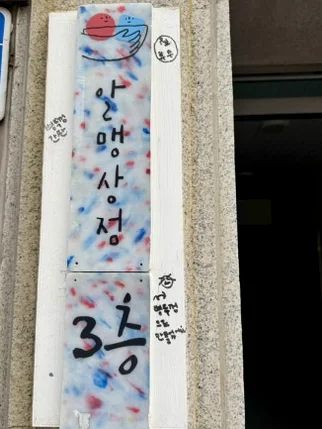
Walking up those stairs feels like leaving the noise of the market behind for something much calmer and more intentional. The space inside is what we’d call *dam-baek-ha-da*—it’s simple, clean, and focused on being useful rather than showing off. Everything is set up to help you understand how a plastic-free life actually works, with different sections dedicated to every part of your daily routine.
The hands-on experience of the refill station 🧴
The main reason people come here is the refill station, which is a big, organized area filled with bulk containers of just about everything you need. There are soft white curtains hanging around the space with simple messages about recycling, which makes the whole process feel a lot more personal than just grabbing a plastic bottle off a shelf.
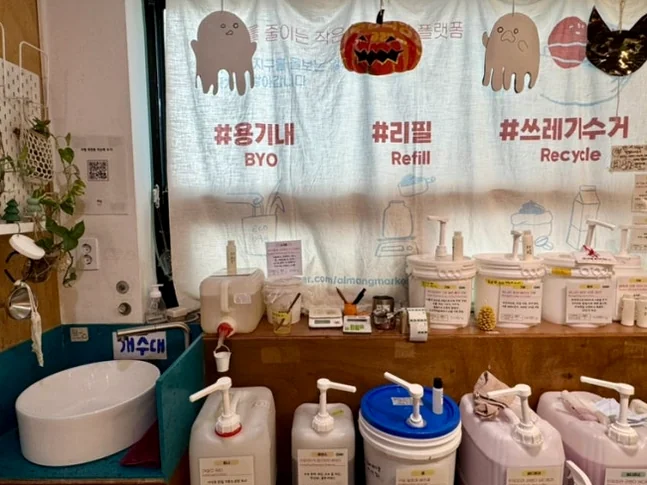
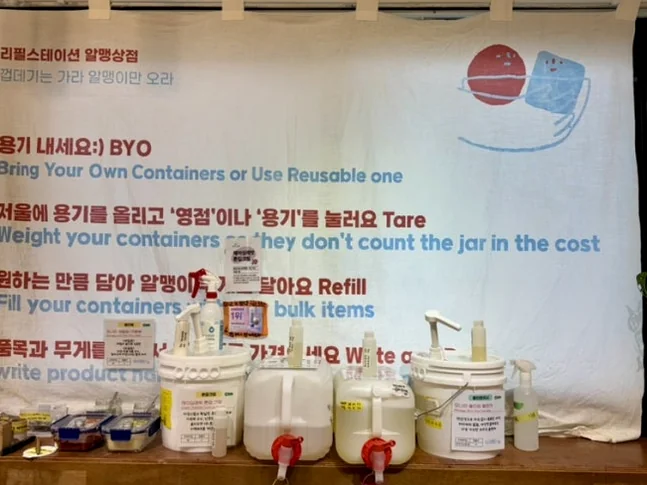
Above the rows of soap and detergent, there’s a big banner with hand-drawn illustrations that explains exactly what to do. It’s helpful because it takes the stress out of your first visit, showing you how to weigh your bottle and fill only what you need. There’s something really satisfying about the process—it turns a boring chore into something you actually think about. Plus, the whole room has this light, clean scent from all the natural soaps that makes the experience even better.
Good things for a simpler home 🏠
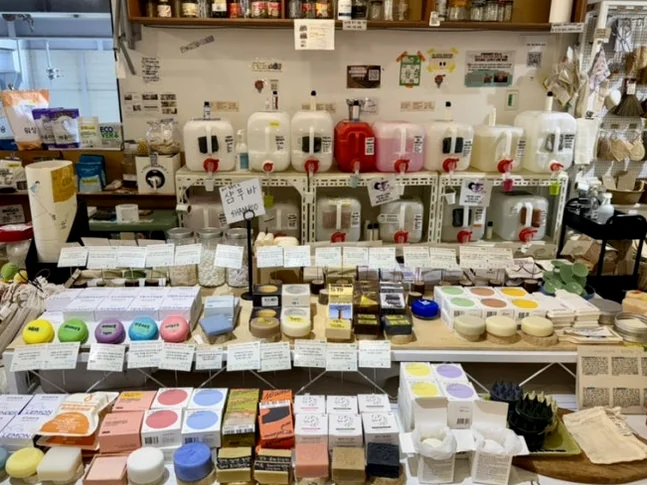
Aside from the liquids, the shop has a solid selection of other household goods that don't come in plastic. Right in the middle of the room, there’s a white table covered in colorful bars of soap and big detergent tubs, proving that living a bit more sustainably can still look really good in your bathroom or kitchen.
How do you actually use the refill station?
It’s actually pretty straightforward: you just put your empty container on the scale to get its starting weight, write that down, and then fill it up with whatever you’re buying. Once you’re done, you weigh it again to see how much you’ve added, and that’s what you pay for. It’s a very fair way to shop because you’re not paying for the fancy bottle or the marketing—just the product itself.
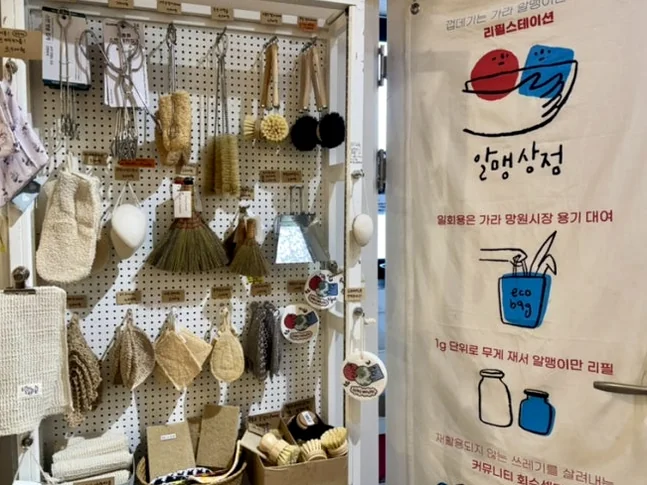
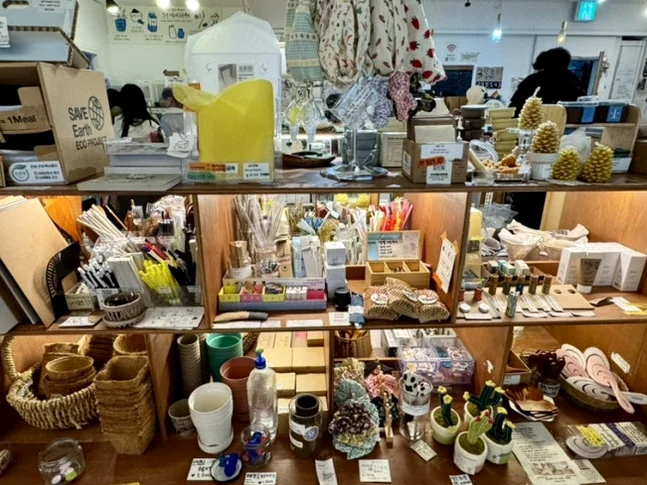
The walls are lined with wooden pegboards holding eco-friendly brushes and tools, while nearby shelves are packed with everything from bamboo toothbrushes to reusable kitchen towels. The mix of natural wood and earthy colors makes the whole place feel warm and inviting, which is probably why people tend to hang around and read the labels instead of just rushing out.
Connecting with the community 🤝
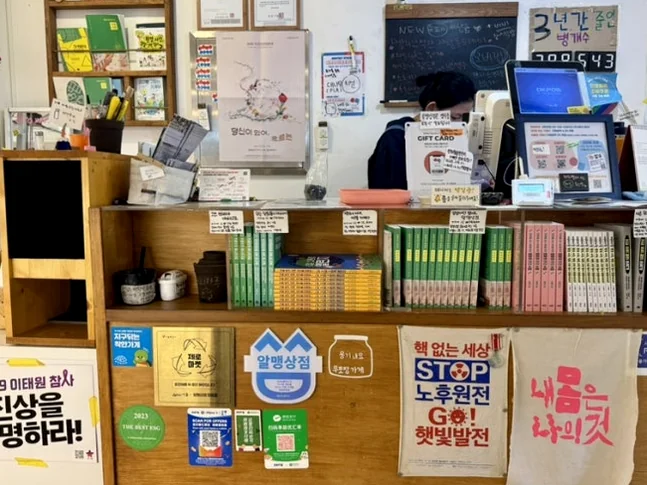
When you’re ready to head out, you’ll end up at the wooden checkout counter, which serves as a bit of a hub for local environmental projects. You’ll see stickers and flyers for various campaigns, reminding you that this isn't just about shopping—it’s about being part of a bigger change. The staff are great, too; they’re always happy to give you a tip on how to switch to eco-friendly products without making it feel like a huge, overwhelming task.
When is the best time to drop by?
While the market is busy most of the time, I’d suggest going on a Tuesday or Wednesday afternoon if you can. It’s a lot quieter then, so you can actually talk to the people who run the place and learn more about where the products come from. It also gives you plenty of time to stop by Little Meadow afterward for a piece of their lemon cake and a coffee while you look over what you’ve picked up.
A few final thoughts 🌟
Mangwon-dong is one of those rare places in Seoul where you can see the past and the future sitting right next to each other. A visit to Almang Market is more than just a quick errand; it’s a way to rethink how much waste we usually create. The space is open to everyone, easy to navigate, and feels like it really belongs to the neighborhood. If you’re looking for a different side of the city that feels a bit more meaningful, this third-floor spot is definitely worth the trip.
Common questions people ask
- Do I have to bring my own bottles? It’s better if you do, but if you forget, they have a corner where people donate clean, used bottles that you can take for free.
- Will I be okay if I don't speak Korean? Definitely. The signs and the refill guides are very visual and easy to follow, and the staff are used to helping out English speakers who are interested in the eco-friendly scene.
- Are there other spots like this nearby? Almang was one of the first, but now you can find plenty of vegan-friendly cafes and upcycling shops all over Mangwon-dong.
📅 Local Weather Guide
🌐 Read this post in other languages:
• 🇯🇵 日本語版 (Japanese Version)
Join the conversation