Sejong's Legacy Illuminated: A Cultural Convergence at Sejong Lake Park
To understand the soul of modern Korea is to witness the seamless dialogue between its intellectual ancestry and its architectural future. In May 2026, Sejong City—the nation's administrative avant-garde—hosts a compelling tribute to the 629th Anniversary of King Sejong's Birth. Set within the sprawling, clinical elegance of Sejong Lake Park, this commemoration transcends the typical local festival. It is a curated odyssey through the legacy of a monarch whose linguistic innovation, Hangeul, remains the most tangible legacy of Korean brilliance.
A Symphony of Literature and Spatial Design 📍
The convergence begins at Sejong Lake Park, an expansive canvas where water and stone reflect the ambition of a new era. For the discerning visitor, this event is not merely a scheduled gathering but an opportunity to experience the 'Sejong Book Love Festival.' Here, the act of acquiring knowledge is elevated to a sensory experience. Independent bookstores and niche stationery labels congregate, offering a sophisticated alternative to the digital noise of the 21st century. This literary landscape is further enriched by talk concerts featuring cultural icons like Kim Jin-myeong and Yozo, who offer intellectual depth to the king's scholarly pursuits.
The Aesthetic Rigor of Hangeul ✨
King Sejong's philosophy was defined by an enlightened empathy for his people, a sentiment that birthed one of the most scientific alphabets in existence. At this 2026 iteration, the 'Hangeul Art Truck' serves as a mobile gallery, showcasing the exceptional texture of the Korean script through the lens of artist Chun Geun-seong. The visual choreography of these artworks invites a deeper contemplation of how form and function can coexist beautifully. Walking through the park's serene pathways, one perceives the meticulous planning of the venue as a physical manifestation of the king's own intellectual rigor.
Curating the Intellectual Journey
The festival's narrative is meticulously paced. While the daytime hours are dedicated to the pursuit of literature and the tactile exploration of art, the atmosphere shifts as the sun sets over the water. The presence of the National Symphony Orchestra on the evening of May 15th provides a sophisticated auditory layer to the proceedings, bridging the gap between historical reverence and contemporary refinement. Every element, from the storyteller Hyangachi's compelling narratives to the interactive workshops, is designed to foster a profound appreciation for a culture that values the power of the written word.
Architectural Grandeur as a Cultural Backdrop 🎨
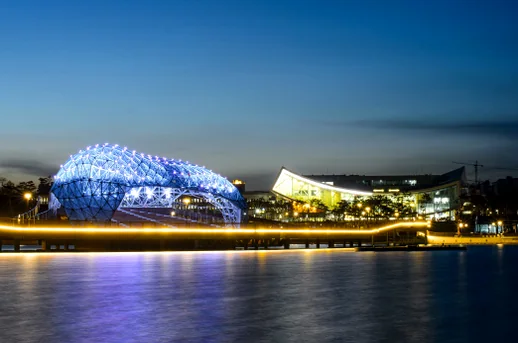
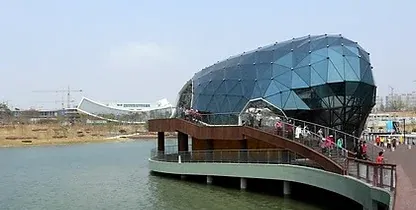
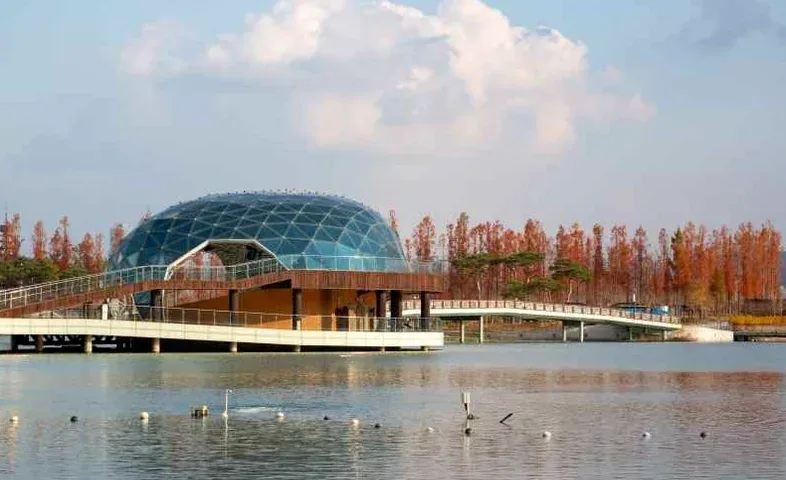
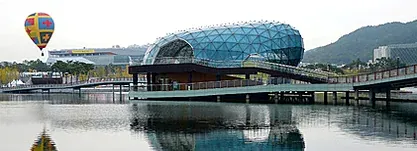
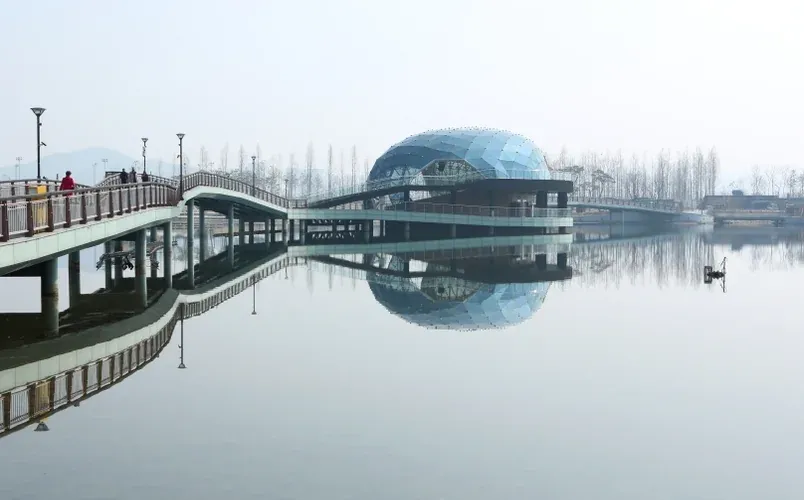
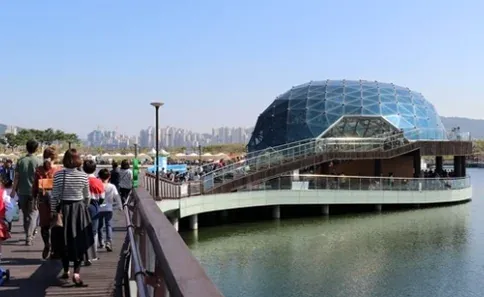
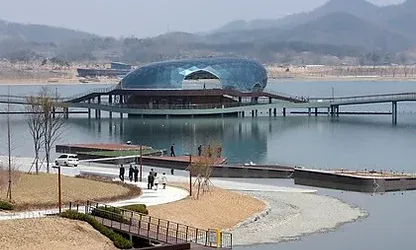
As the largest artificial lake park in Korea, the venue itself demands attention. Its design emphasizes a certain detached elegance, offering vast open spaces that allow the festival's diverse programs to breathe. The spatial choreography ensures that the experience remains unhurried, a rare luxury in the fast-paced rhythm of K-culture. The Eungdari Bridge stands as a striking landmark, providing a vantage point from which to observe the harmonious blend of nature and the sophisticated urban silhouette that defines Sejong City in 2026.
An Indexed Glimpse of the 2026 Program
Navigating this cultural immersion requires an appreciation for its temporal flow. All programs offer complimentary access, ensuring that the legacy of King Sejong remains an inclusive gift to the public, much like the alphabet he gifted his people centuries ago.
| Curated Experience | Temporal Window (2026) | Venue Profile |
|---|---|---|
| Sejong Book Love Festival | May 15-16, 11:00-18:00 | Central Plaza & Lake Periphery |
| Author & Historian Salons | May 15-16 (Scheduled Intervals) | Main Stage Area |
| Hangeul Art Truck Exhibition | May 15-16, 11:00-18:00 | Artisanal Zone |
| National Symphony Performance | May 15, Twilight | Waterfront Stage |
| Sejong Nakwha Festival | May 16, 19:30 onwards | Sejong Lake Horizon |
The Celestial Finale: Nakwha Festival 🎆
The true crescendo of this cultural narrative arrives on the night of May 16th with the Sejong Nakwha Festival. This is fire art in its most poetic form. Eschewing the aggressive noise of modern pyrotechnics, 'Nakwha' involves the slow, rhythmic descent of embers from suspended charcoal sachets. It is a romantic, ethereal display that transforms the night sky into a shower of terrestrial stars. As the flames dance over the dark waters of Sejong Lake, the scent of charcoal and the soft crackle of light create a moment of profound introspection.
To fully experience this mesmerizing finale, one must secure a vantage point early—perhaps near the Eungdari Bridge—after enjoying a quiet coffee at one of the park's minimalist cafés. The interplay of the illuminated urban landscape and the traditional fire art provides a visual metaphor for Sejong City itself: a place where the brilliance of the past lights the way for the future.
Director K's Final Assessment 🗺️
The anniversary of King Sejong's birth is more than a holiday; it is an annual renewal of Korea's intellectual identity. For those traveling to Sejong City, the experience is best approached with a sense of unhurried curiosity. While the city's infrastructure is optimized for public transit, the sheer scale of the park suggests that a journey by local bus—or a patient arrival by car at the designated central parking zones—is the most prudent way to enter this curated ecosystem.
In a world often obsessed with the ephemeral, the 629th Anniversary celebration offers something enduring. It is a reminder that the most compelling innovations are those that serve the people, and the most exceptional art is that which honors its roots while looking forward to 2026 and beyond.
📅 Local Weather Guide
Chungcheong Weather🌐 Read this post in other languages:
• 🇯🇵 日本語版 (Japanese Version)
Join the conversation