Gyeongju Oreung: The Architectural Silence of Silla’s Sacred Five
- Five ancient mounds and the mystical Alyeongjeong well define this primordial royal landscape.
- Open throughout the year, with April 2026 offering the most exquisite spring aesthetic.
- Situated at 67-1 Tap-dong within the historic heart of Gyeongju-si, Gyeongbuk.
- The sacred origin site of the Silla Dynasty honoring its legendary founding monarchs.
- Witness the golden hour as long pine shadows dance across the velvet green tombs.
To walk through Gyeongju is to traverse the skin of an ancient giant, and nowhere is that pulse more rhythmic and subdued than at Oreung. As Director K, I have always found that the true luxury of travel lies in silence—a commodity that Oreung provides in abundance. Known as the Five Royal Tombs, this site serves as the literal and metaphorical foundation of the Silla Dynasty. While the more famous Daereungwon often captures the tourist gaze with its proximity to urban cafes, Oreung offers a sophisticated alternative for those seeking architectural silence and historical weight. In the 2026 season, the site remains a sanctuary of minimalism, where the curvature of the earth meets the heritage of a millennium.
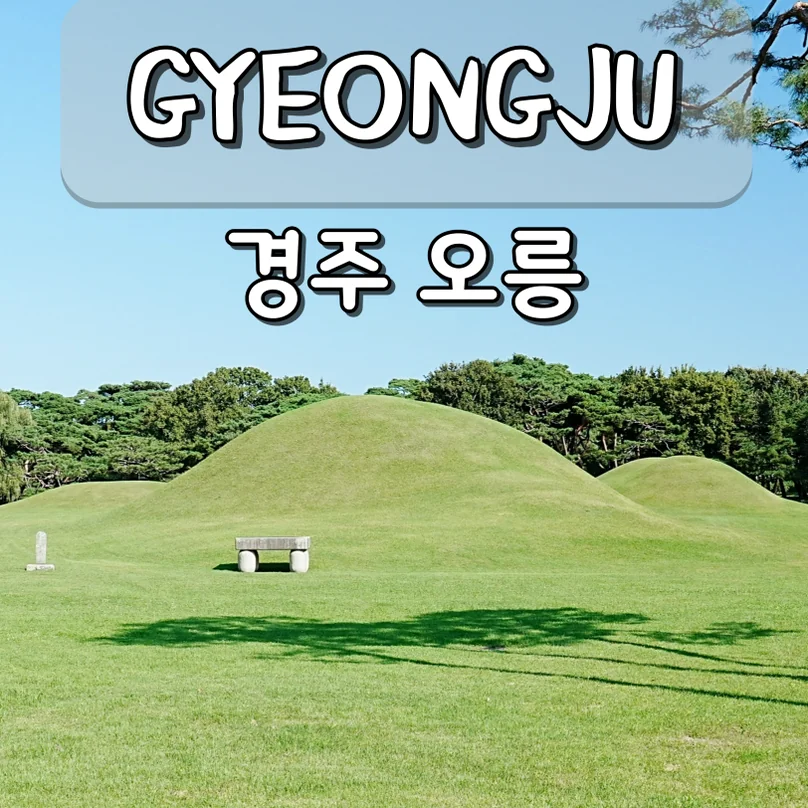
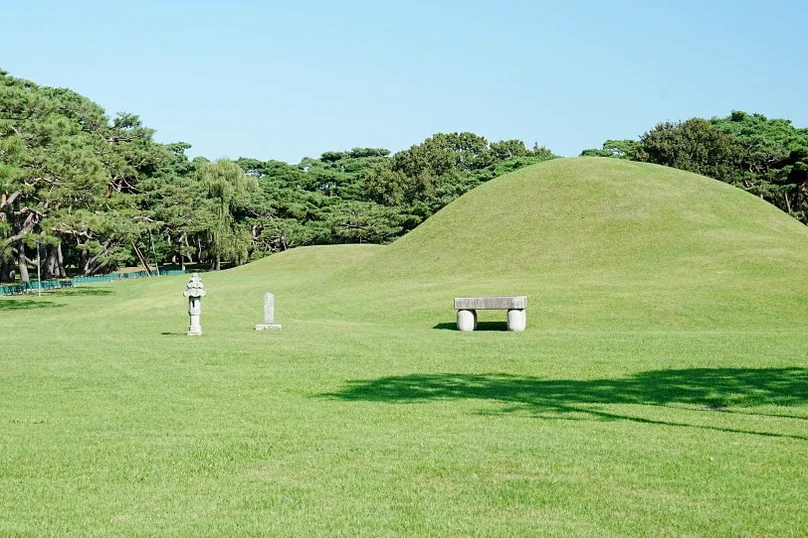
The aesthetic of Oreung is defined by its five massive earthen mounds, believed to be the final resting places of Bak Hyeokgeose, the founder of Silla, his queen Alyeong, and three subsequent kings. There is a hauntingly beautiful narrative behind this unique configuration. According to the Samguk Yusa, after King Hyeokgeose ascended to the heavens, his body fell back to earth in five distinct parts. When the people attempted to bury them together, a great snake intervened, forcing the creation of five separate tombs. This legend, while mystical, explains the specific spatial choreography of the site, where each mound occupies its own deliberate space on the lush green canvas.
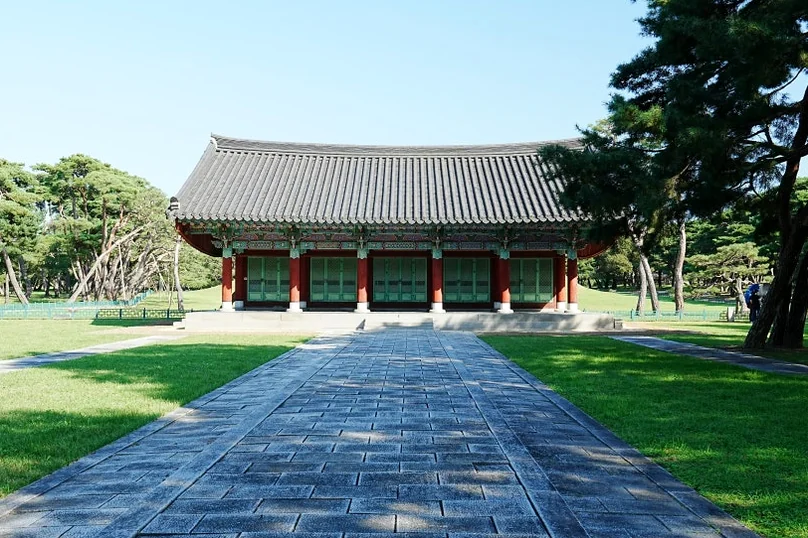
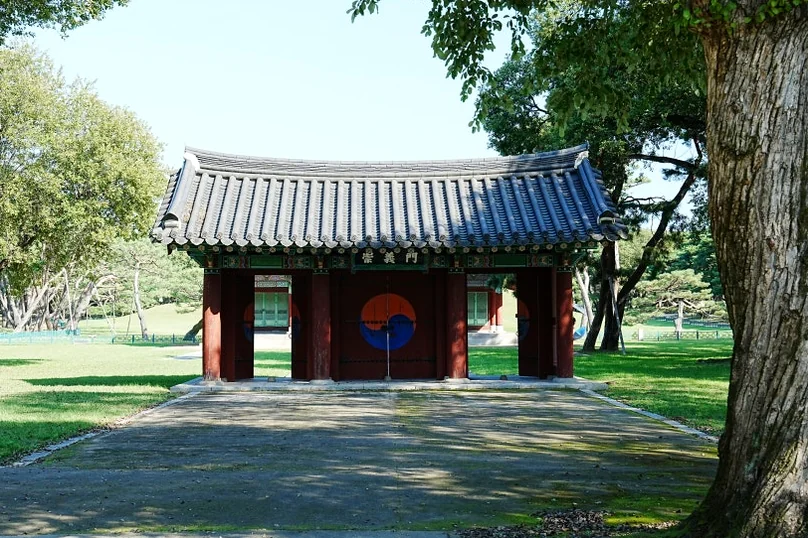
Beyond the mounds, the ritual spaces offer a masterclass in traditional Korean geometry. Sungdeokjeon, the hall dedicated to the memory of the first king, stands as a testament to the enduring respect for lineage. Its deep-colored eaves and weathered wooden pillars provide a stark, elegant contrast to the soft, rounded lines of the tombs. This juxtaposition of the rigid, human-built structure against the organic, flowing earth is a core tenet of Korean spatial philosophy—harmony through contrast. Travelers in 2026 will find the grounds meticulously maintained, preserving the solemnity of the ancestral rites that still resonate within these hallowed walls.
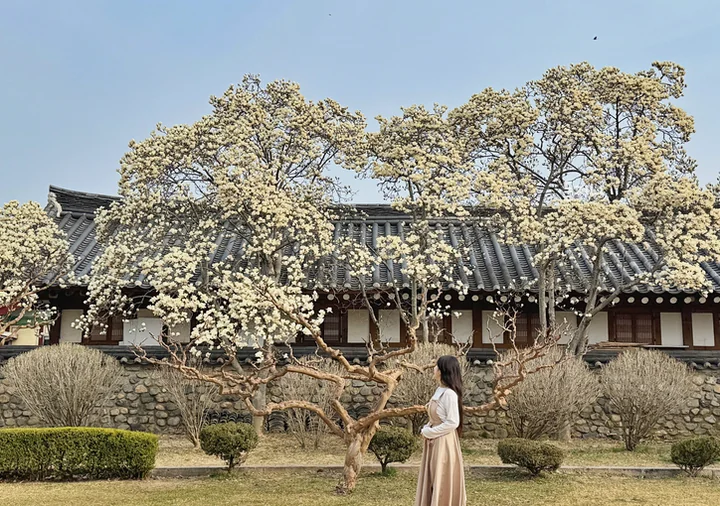
The flora of Oreung acts as a seasonal curator for the visitor's experience. While the pine forests provide a permanent curtain of emerald green, the arrival of spring brings the ephemeral beauty of magnolia blossoms. These white petals, falling against the backdrop of ancient stone walls, create a fleeting editorial mood that photographers and quiet contemplators cherish. The secret behind this site's popularity among those in the know lies in its lack of commercial noise. It is a place where history is not performed but simply exists, allowing for a deep, unfiltered connection with the spirit of the Silla era.
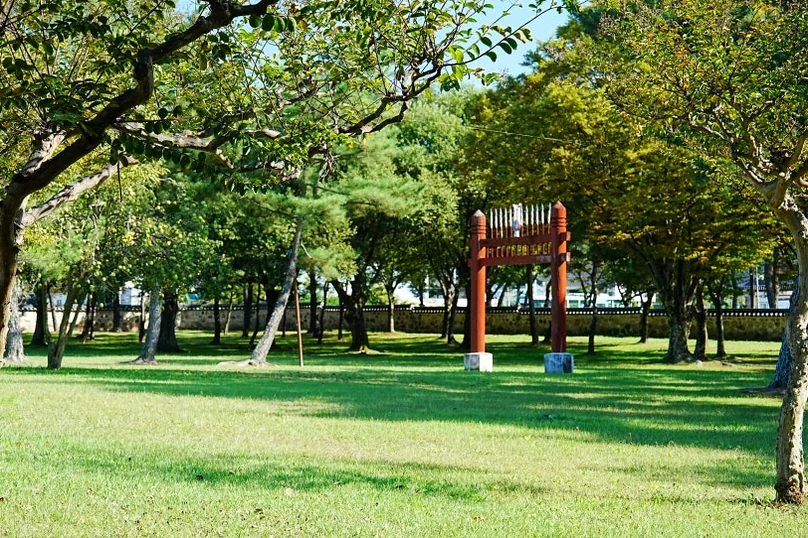
Deep within the complex lies Alyeongjeong, a sacred well marking the birthplace of Queen Alyeong. Legend states she was born from the side of a dragon, and the well remains a point of pilgrimage for those interested in the matriarchal roots of the dynasty. The path leading here is lined with ancient, gnarled pines that seem to lean in with secrets of the past. The spatial layout encourages a slow, circular wandering, a stark departure from the linear rush of modern life. It is this forced deceleration that makes Oreung a premium destination for the globally-minded traveler seeking depth over surface-level tourism.
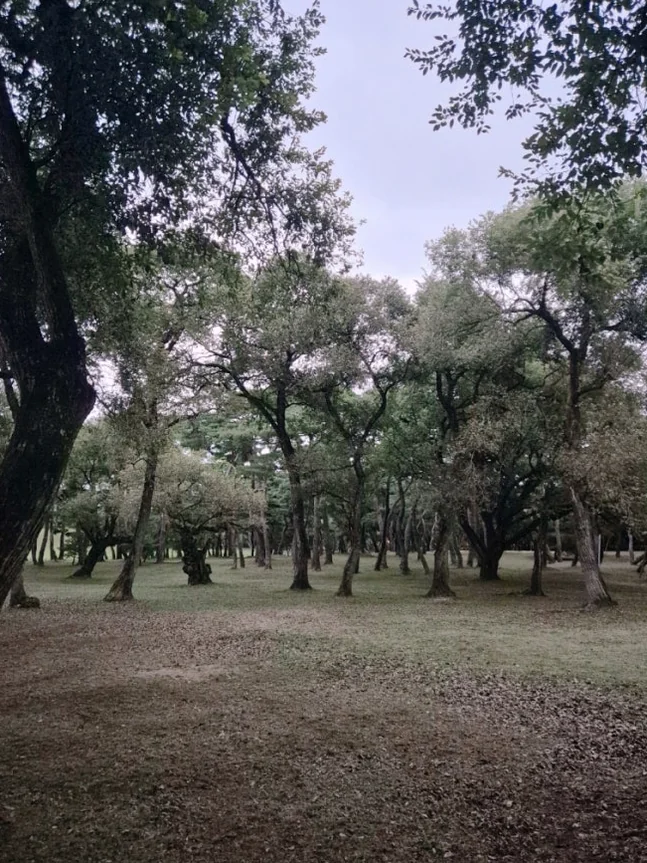
As the sun sets over the Gyeongju horizon, the shadows of the five mounds lengthen, reaching toward the modern city as if to remind us of the foundations upon which it stands. Oreung is not merely a cemetery; it is an outdoor museum of the Silla soul. For those visiting in late April 2026, the air is crisp, the green is vivid, and the silence is profound. It remains one of the few places where one can truly hear the whisper of ancient kings amidst the rustle of the pine needles. To visit Oreung is to witness the elegance of the beginning.
- Address: 67-1 Tap-dong, Gyeongju-si, Gyeongsangbuk-do
- Operating Hours: 09:00 - 18:00 (March to October), 09:00 - 17:00 (November to February)
- Admission Fees: Adults 2,000 KRW / Youth & Military 1,000 KRW / Children 500 KRW
- Parking Facilities: Available on-site (1,000 KRW for standard vehicles)
- Nearby Attractions: 4 minutes from Cheomseongdae and the Gyeongju National Museum
📅 Local Weather Guide
Gyeongju Weather📍 Gyeongju Oreung
67-1 Tap-dong, Gyeongju-si, Gyeongsangbuk-do
🌐 Read this post in other languages:
• 🇯🇵 日本語版 (Japanese Version)
Join the conversation