Beyond the Moonlight: The Timeless Allure of Gyeongju Donggung Palace and Wolji Pond
A First Look at Gyeongju's Crown Jewel 📍
To truly get a sense of Gyeongju, you really should see this secondary palace of the Silla crown prince as day turns into night. Historically known as Anapji, it's now back to its original name, Donggung Palace and Wolji Pond, and it's a solid example of traditional Korean landscaping where buildings and nature just seem to come together beautifully.

For a smooth visit, there are a few things to keep in mind. While the site is open all day, most people tend to arrive just before sunset to see the lights turn on. Here are some details you'll want to have for your trip:
- Operating Hours: 09:00 AM – 10:00 PM (Last admission at 9:30 PM).
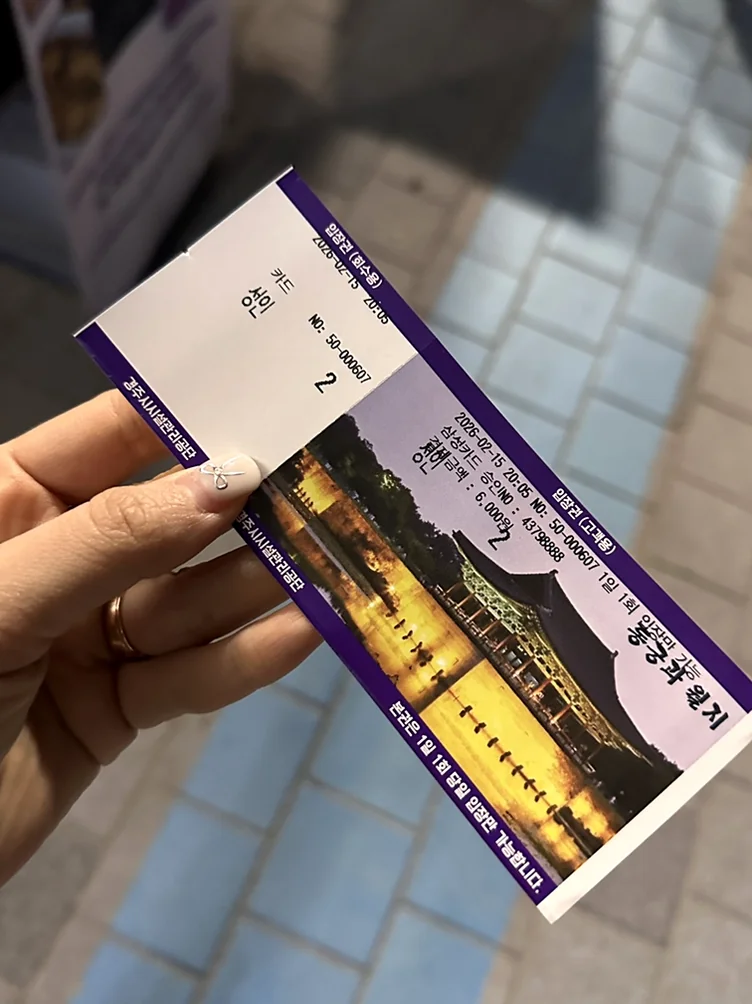
- Ticketing: You can get your tickets at the kiosks when you arrive or through online booking, which can be easier.
- Parking: Free parking is available on-site, though it can get full fast, especially in spring and on weekends.
A Look at the Admission Fees
| Category | Individual (KRW) | Group (20+ People) |
|---|---|---|
| Adults (19-64) | 3,000 | 2,400 |
| Youth (13-18) | 2,000 | 1,600 |
| Children (7-12) | 1,000 | 800 |
Walking Through the Palace of the Moon 🌙
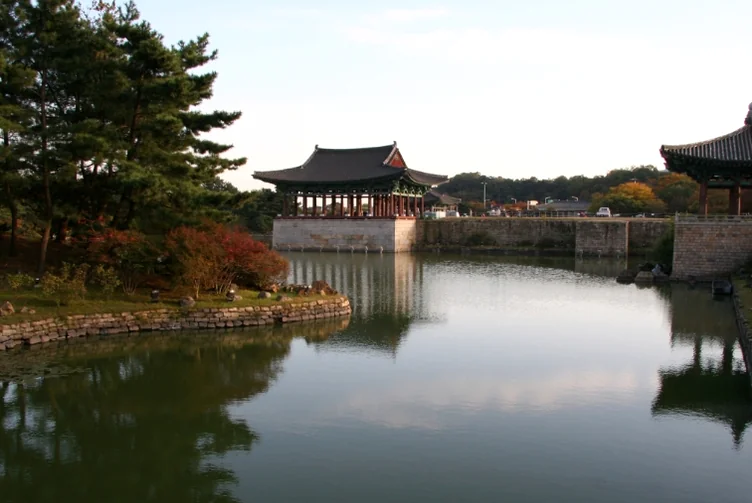
Stepping through the gates of Donggung Palace feels a bit like walking into a history book. Its name, Wolji, means 'The Pond that Reflects the Moon,' which is a nice contrast to its old name, Anapji, or 'Pond of Geese and Ducks'—a name it got during the Joseon era when the site wasn't much more than ruins. Now, three of the original twenty-six pavilions have been carefully rebuilt, using archaeological finds to bring back a sense of what the unified Silla period looked like.
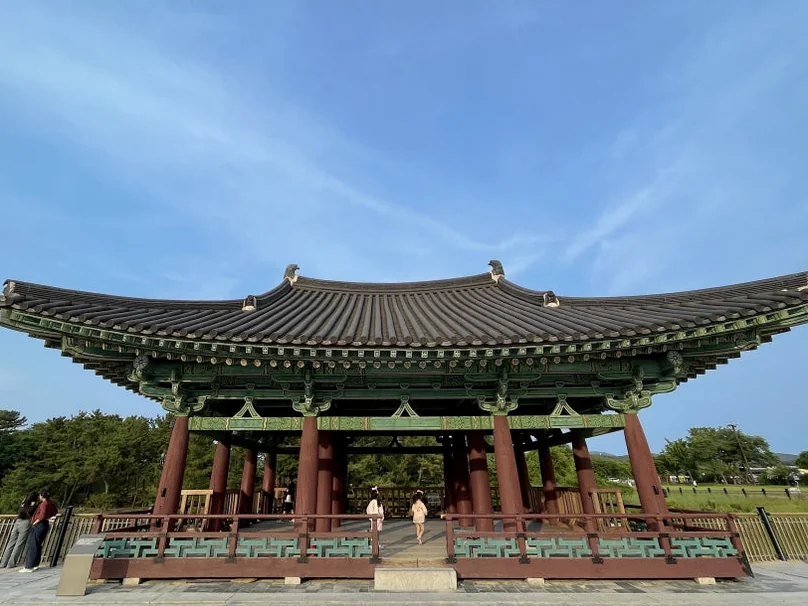
The buildings here have Pal-jak style roofs, which you'll notice for their gracefully flaring eaves that seem to copy the flight of birds. I saw that every pillar and roofline was set up to make a nice shape against the surrounding forest and water. You can really see the good work that went into them, especially when you look from across the pond and the buildings seem to float on the water.
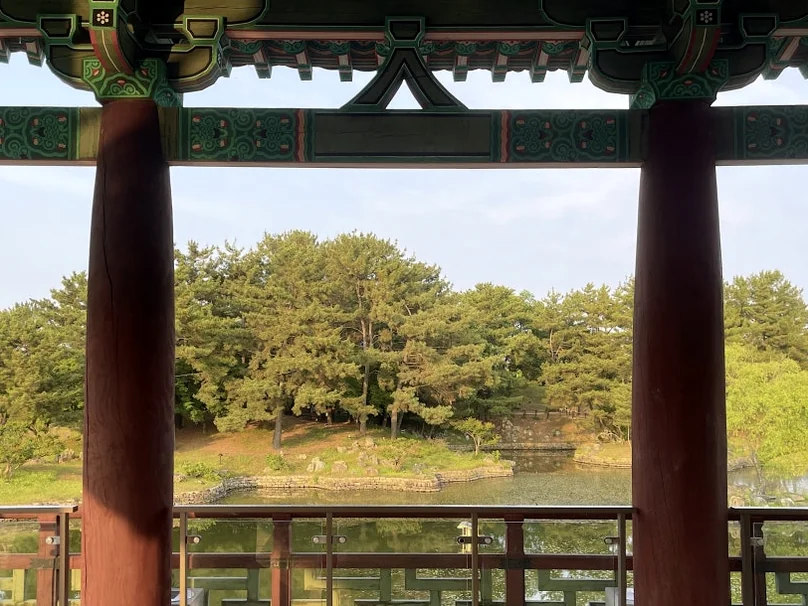
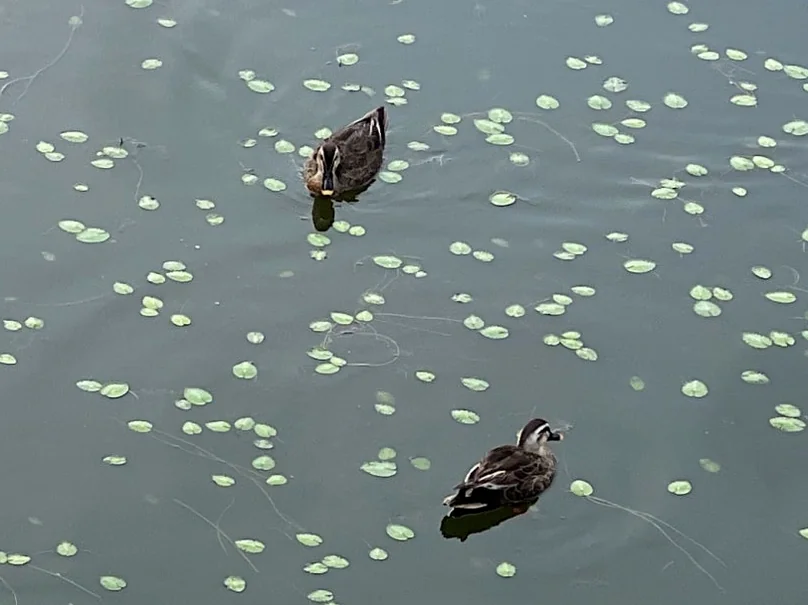
While the buildings are definitely what draw your eye, the pond itself, with all its nature, brings a sense of calm. During the day, you'll spot ducks moving among the lotus leaves, just like it must have been a thousand years ago. The pond was actually designed so you can't see the whole thing from any one spot, which makes the space feel bigger and more intriguing than it really is.
The Art and History of Silla 🎨
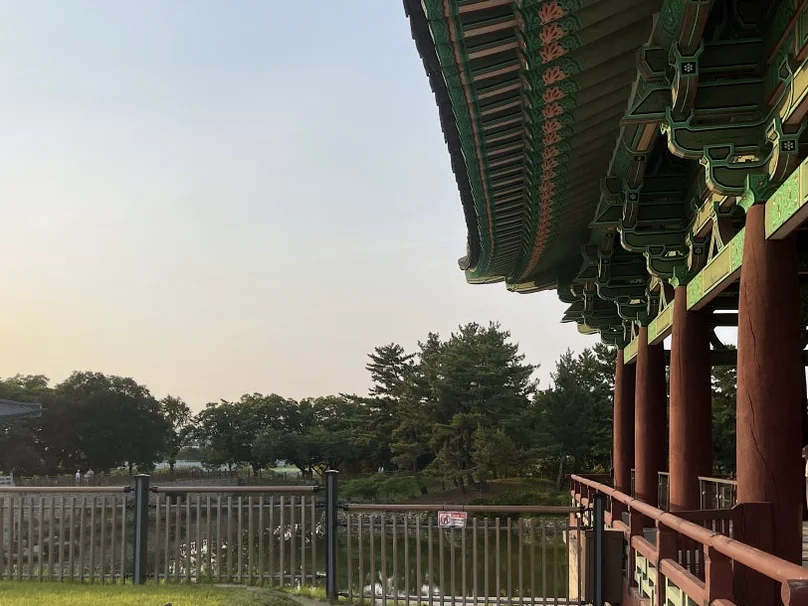
If you're into the finer points, take a moment to look closely at the Dancheong—the traditional decorative coloring. It really gives you a glimpse into how well Silla royalty lived. These vibrant greens, reds, and blues aren't just pretty; they also protect the wood from the weather and stand for the cosmic order. This kind of art still shapes how we see old Korean sites today.

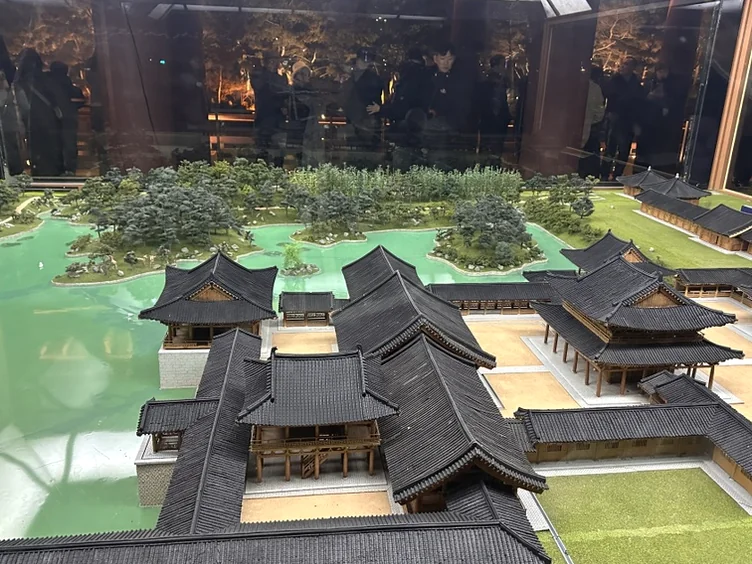
Before you walk around, it's a good idea to check out the exhibition hall by the entrance. It has a really good scale model of the palace complex, showing what it was like at its best in the 7th century. Seeing how big the original twenty-six pavilions were helps you imagine just how fancy the banquets must have been, with foreign diplomats and royalty attending. While many of the 30,000 artifacts found in the pond are now at the Gyeongju National Museum, the models here really help you understand what you're about to see.
As Evening Falls: A Magical Transformation ✨
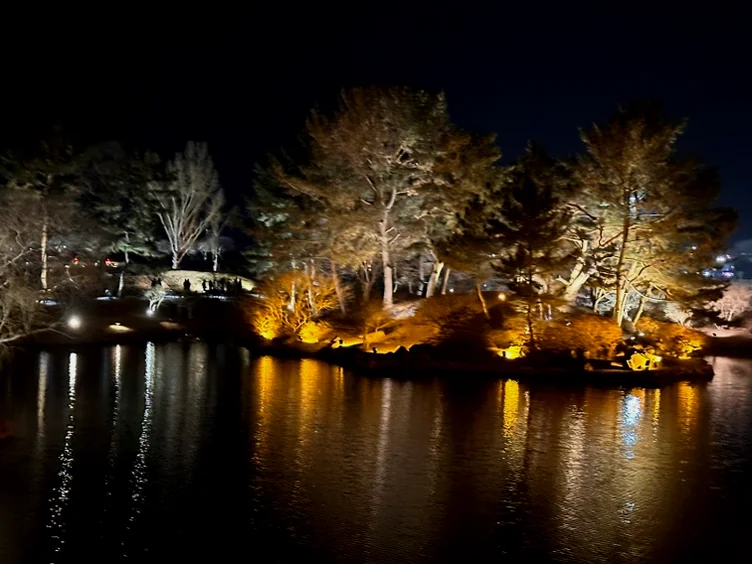
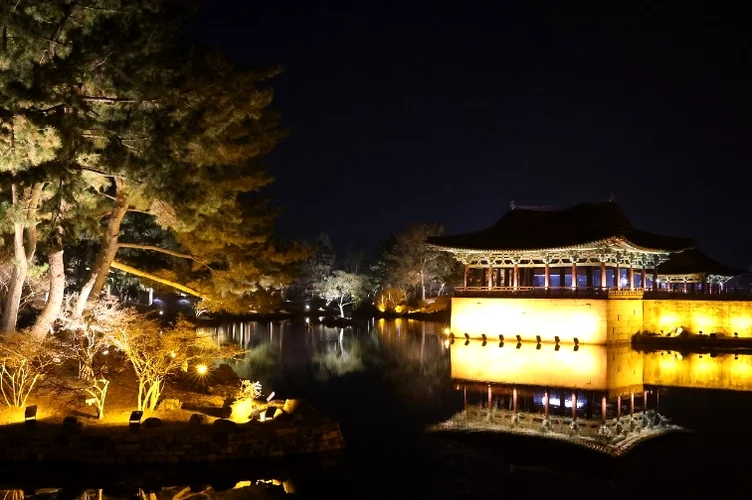
When the sun starts to go down, the atmosphere at Donggung and Wolji really changes. The whole place goes from being a historical spot to something quite dreamy. Lights come on, illuminating the old trees around the water, and they make reflections so clear they almost mirror each other. It feels very *go-jeok-ha-da*, which is a unique Korean term for that quiet, contemplative peace that just settles over you.
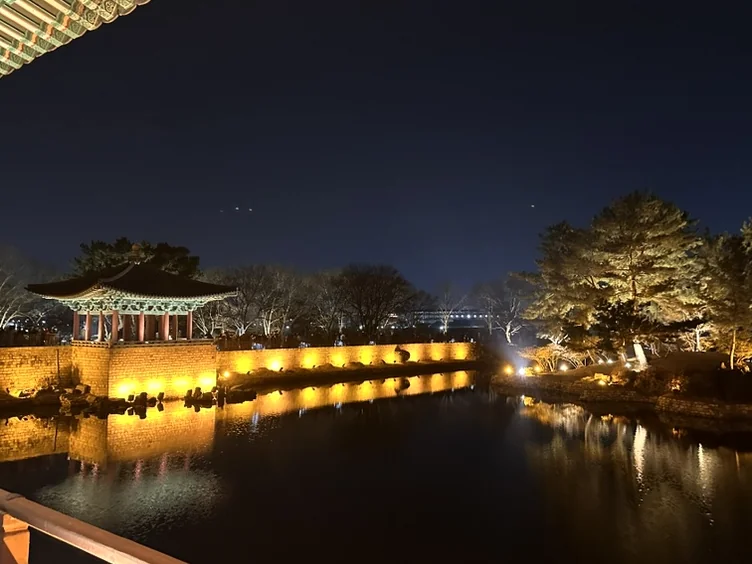
The best part of the evening is definitely the golden glow from the pavilions. Pavilion No. 3's reflection in the still water is pretty much the classic Gyeongju photo everyone wants to get. At that moment, you can hardly tell where the sky ends and the water and buildings begin. I ended up spending a lot of time near the southern edge of the pond, as the curves of the shoreline there just make for the best spots to catch the palace's reflection.
My Pick for the Best Time to Go
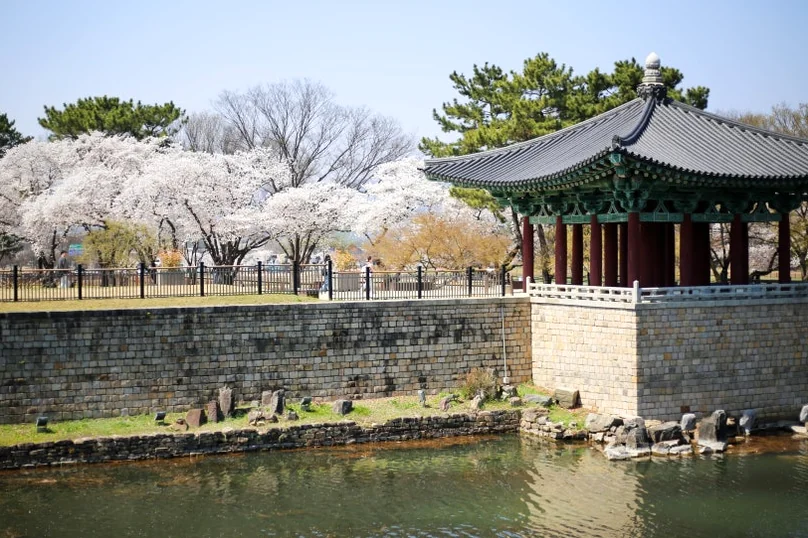
The best time to visit is probably between 5:30 PM and 7:30 PM. This way, you get to see it clearly in the day, enjoy the sunset's romantic colors, and then watch the lights come fully alive at night. If you're there in mid-April during spring, the cherry blossoms around the palace add a layer of soft pink to the golden buildings, making for a seasonal sight you won't easily find anywhere else in Korea.
When Spring Arrives, Plus Practicalities 🌸
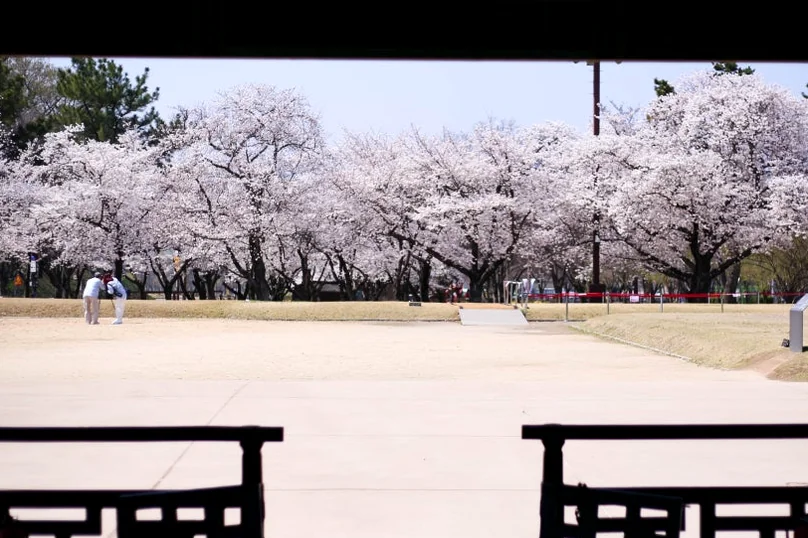
If your trip happens during the cherry blossom season, you'll see Donggung and Wolji looking its most romantic. The way the solid traditional buildings meet the delicate beauty of the blossoms makes for a beautiful, touching scene. Walking along the stone paths beneath a canopy of white and pink petals is a classic Korean spring experience, one that really fits with how much locals enjoy the changing seasons.
If you're coming by car, parking on-site can be pretty tough during these busy periods. A good tip from locals is to park at the Hwangryongsa Temple History and Culture Center or the Gyeongju National Museum nearby. Both are just a 5 to 10-minute walk away and usually have more spaces. Plus, the site is set up well for walking to other big landmarks like Cheomseongdae Observatory and Daereungwon Tomb Complex, which makes it a great last stop on a day-long history tour.
A Few Last Thoughts & Things to Know 🏛️
Donggung Palace and Wolji Pond is more than just a pretty place for photos; it's a real look into the sophisticated life of the Silla Dynasty. Whether you love history, photography, or just want a peaceful night walk, this spot really connects you to Korea's past. Just remember to dress warmly, as Gyeongju can get pretty cold after dark, even in the spring.
Getting to Donggung and Wolji from Gyeongju Station
You can catch bus numbers 10, 11, or 600 from the main city areas or Gyeongju Station. If you're arriving from KTX Singyeongju Station, the 700 bus is your best bet. Taxis are also easy to find and pretty affordable within the city. Just a heads up that pets aren't allowed inside the heritage site, which helps keep the place as it should be.
Is it Easy for Wheelchairs and Strollers?
Yes, the main paths around the pond are paved or made of flat sand, so they work well for wheelchairs and strollers. You can also rent them for free at the entrance, on a first-come, first-served basis, which helps make sure everyone can enjoy Silla's beauty.
📅 Local Weather Guide
Gyeongsang Weather🌐 Read this post in other languages:
• 🇯🇵 日本語版 (Japanese Version)
Join the conversation