A Symphony of Falling Stars: The 450-Year-Old Fire Ritual of Andong Hahoe Village
Seoul's discerning eye constantly seeks the profound, the exquisite, and the authentically preserved amidst the dynamic currents of global culture. It is within this spirit that we turn our gaze to a spectacle not of explosive grandeur, but of profound, contemplative beauty: the Hahoe Seonyu Julbul Nori. This isn't merely an event; it is a meticulously choreographed elegy to light and tradition, a testament to an aesthetic cultivated over centuries.
Quick Local Takeaways
For those requiring the precise parameters of this esteemed cultural observance, the essential details are presented here.
| Category | Details |
|---|---|
| Event Period | Saturdays (May – Nov 2026, specific dates vary) |
| Operating Hours | 19:00 – 21:00 (Autumn sessions start at 18:00) |
| Admission Fee | 10,000 KRW (Pre-reservation required) |
| Booking Platform | GB-Voyage (Gyeongbuk-wayaji) Official Website |
| Official Website | https://www.gb-voyage.com |
The Aristocratic Leisure of Falling Fire
In an era increasingly captivated by the ephemeral bursts and vibrant chromatic explosions of modern pyrotechnics, the Hahoe Seonyu Julbul Nori presents a profound counter-narrative, a masterclass in the exquisite beauty inherent in descent. Its genesis lies in the 16th century, emerging as a refined diversion for the esteemed *Yangban* — the aristocratic literati of Andong Hahoe Village. This was a realm removed from the boisterous communal revelries; instead, it fostered a contemplative communion where scholars would recite verse from a boat, gliding languidly beneath a gentle cascade of fire. It embodies the ultimate synthesis between the Nakdong River's natural splendor and the meditative philosophical currents of the Joseon era, a harmony that resonates deeply with K-culture's contemporary appreciation for nuanced heritage.
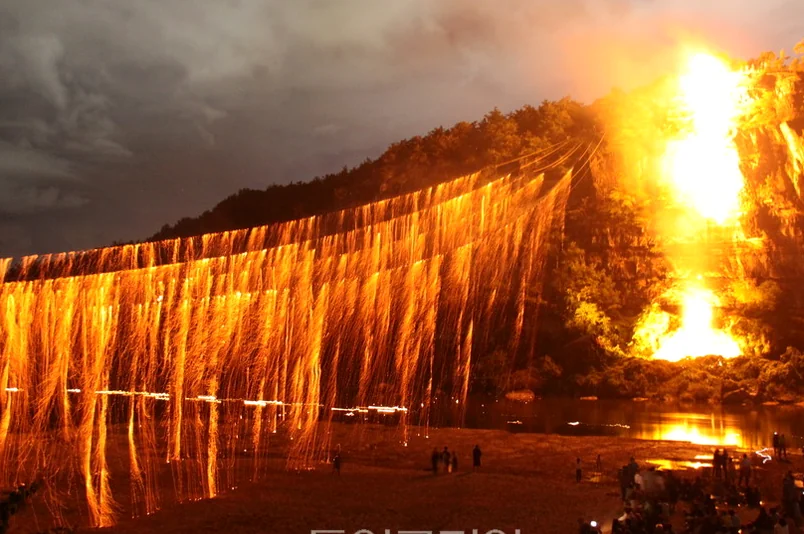
The very appellation of this ritual reveals its multi-faceted charm: *Seonyu*, denoting the elegant boat excursion, and *Julbul*, the captivating rope fire. This is not a singular momentary display, but a meticulously synchronized performance woven from four distinct traditional elements of fire. As twilight surrenders to the deepening night, the atmosphere becomes redolent with the earthy, nostalgic aroma of burning mulberry charcoal — a scent quintessentially Korean. It evokes a distinct sentiment, *go-jeok-ha-da*, a uniquely Korean resonance describing a quiet, peaceful, almost solitary beauty that settles upon the soul as the first embers begin their delicate flicker.
A Four-Part Elemental Narrative
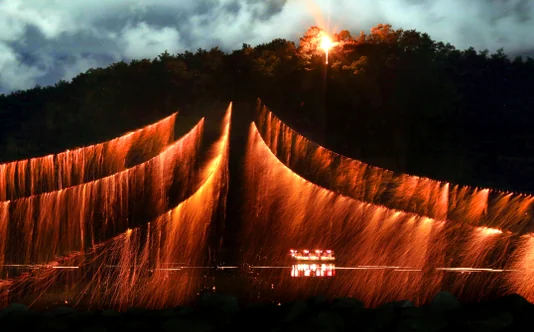
The ceremonial unfolding commences with the Julbul, or rope fire. Robust hemp ropes are artfully stretched from the apex of Buyongdae Cliff, a formidable 64 meters above, traversing the river to the Mansongjeong Forest. Suspended along these lines are hundreds of small pouches, each meticulously filled with a precise blend of mulberry charcoal and salt. When touched by flame, these do not erupt; rather, they perform a slow, deliberate 'breathing.' The salt incites the charcoal to crackle and spit, manifesting as a vertical precipitation of golden sparks, a mesmerizing dance towards the water below. It is a slow-motion cascade of light, enduring for hours, conjuring the illusion of a thousand distant stars gently descending.
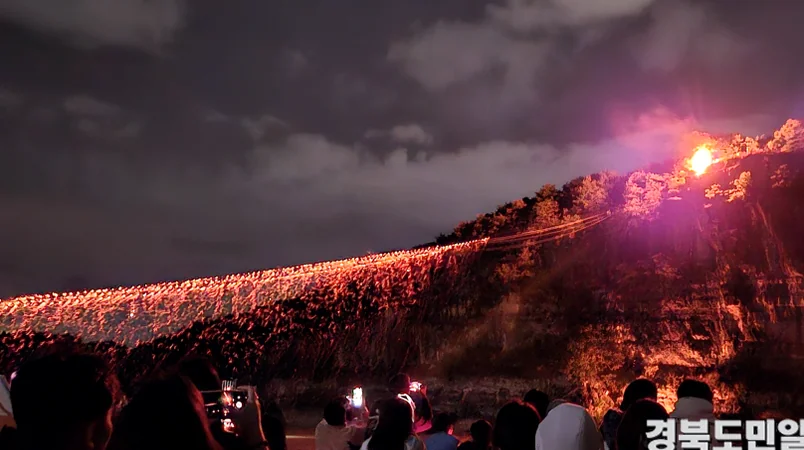
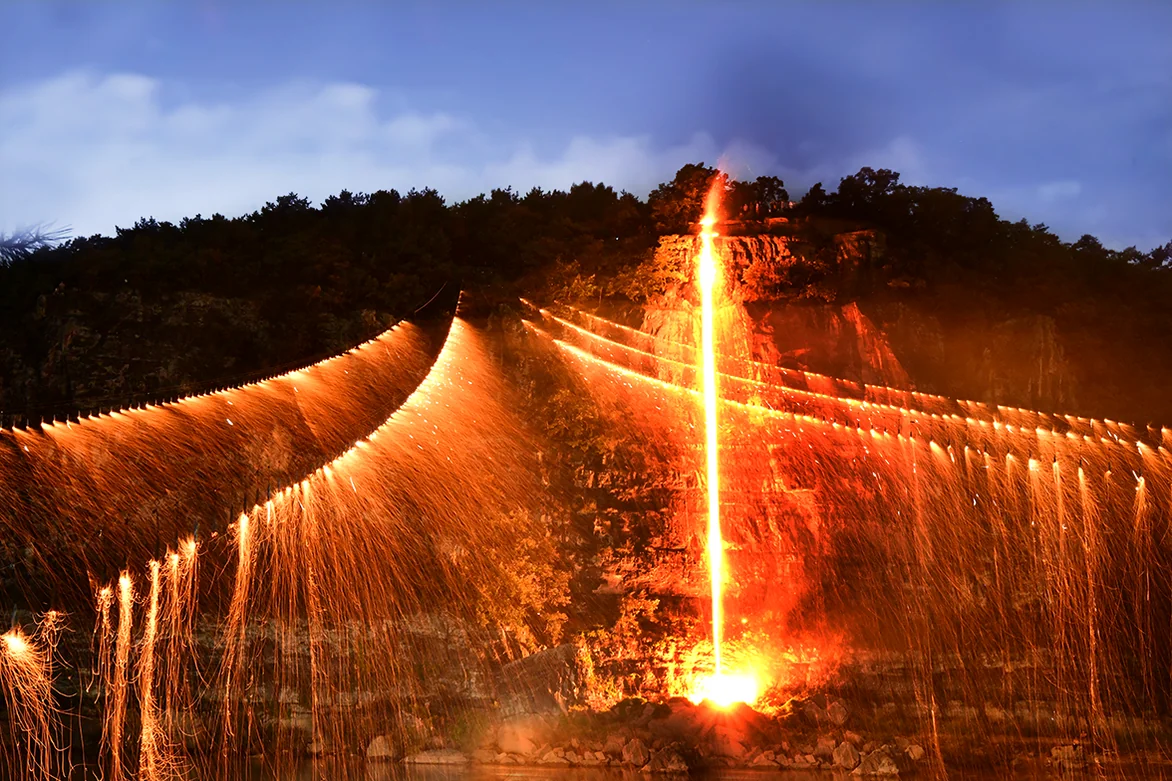
The undeniable crescendo arrives with the Nakhwa, the falling fire. Upon the command *Nakhwa-ya!* (fall, fire!), substantial bundles of burning pine branches are launched from the zenith of Buyongdae Cliff. They plummet through the inky abyss, fragmenting upon the cliff face to unleash a magnificent torrent of orange embers before their final embrace with the river. Simultaneously, hundreds of Dal-gyal-bul (egg-shell boat fires), delicate lanterns crafted from eggshells or paper infused with oil, commence a tranquil downstream drift, transforming the Nakdong River into a flowing celestial tapestry. Amidst this luminous panorama, a traditional vessel, bearing scholars and musicians, glides gracefully, completing this profoundly poetic tableau.
Strategic Planning for the Global Tastemaker
To experience this elevated ritual demands more than mere attendance; it necessitates a sophisticated understanding of timing and logistical acumen. With the implementation of a mandatory pre-reservation system, capped at 2,500 guests, the experience has evolved into one of refined exclusivity. Access becomes available on the GB-Voyage platform precisely one month prior to each scheduled date. To defer this acquisition is to risk relegation to viewing from outside the designated forest perimeters, a perspective significantly diminished from the immersive core. For those with a photographic sensibility seeking unparalleled perspectives, the sandbank zones (Zones A and C) afford an exceptional low-angle vista of the descending sparks, while the chair seating (Zone B) is curated for extended, comfortable contemplation.
A judicious early arrival is not merely advised but imperative. Even for those with secured reservations, parking within Hahoe Village reaches capacity with surprising swiftness. To arrive by 15:00 allows ample time to absorb the UNESCO-listed village in daylight, secure a parking position at the 3rd Parking Lot (the closest to the forest entrance), and claim one's designated space on the sandbank, ideally with a personal mat. As evening descends, the nocturnal chill by the river can become remarkably pronounced, even during summer months. A light windbreaker and a thermos of warming tea are not mere comforts but essential accouterments to ensure a two-hour immersion in this ritual, unperturbed by the elements.
Final Thoughts & FAQ
Discerning patrons often inquire into the nuances of capturing this ephemeral beauty or navigating the elements that shape the experience.
What is the best way to photograph the sparks?
To master the visual narrative of the Julbul, an elevated photographic strategy is paramount. A sturdy tripod, coupled with an extended exposure of six to eight seconds, will transmute transient sparks into luminous golden threads. Calibrated ISO settings, between 800 and 1600, are optimal for preserving textural integrity without introducing undue visual noise.
Is the event cancelled in case of rain?
The resilience of tradition dictates that this ritual largely endures even through light precipitation, thanks to the inherent design of the charcoal pouches. However, exigencies of nature may necessitate a relocation of viewing zones from the riverside sandbanks to the protective embrace of the forested areas, primarily when water levels dictate a shift in safety protocols.
The Hahoe Seonyu Julbul Nori serves as a poignant reminder that true beauty does not always require grandiosity or velocity. It is a measured, rhythmic descent, an ode to the quiet passage of time and the profound stillness of the night. It is, perhaps, the most elegant pathway to apprehending the spirit of old Korea, meticulously preserved within the glowing embers of a mulberry fire, a compelling jewel in K-culture's crown.
📅 Local Weather Guide
Gyeongsang Weather🌐 Read this post in other languages:
• 🇯🇵 日本語版 (Japanese Version)
Join the conversation