A Sanctuary of Plant-Based Heritage: Exploring the 100-Year-Old Hanok of Vegan Insa
📌 Quick Destination Summary
- 🏞️A century-old Hanok housing a progressive 100% plant-based culinary philosophy.
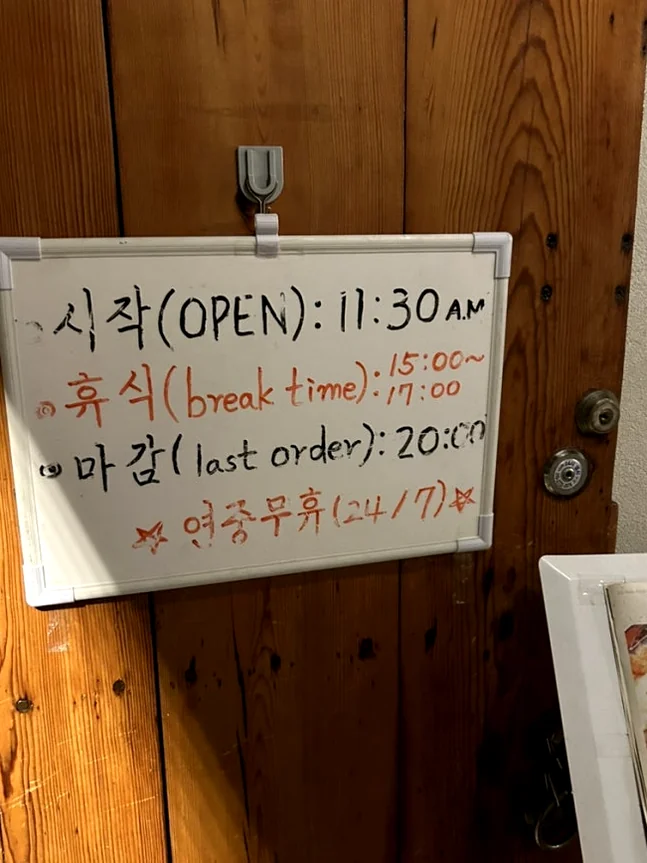
- 🗓️Daily service from 11:30 to 20:00, observing a mid-day pause between 15:00 and 17:00.
- 📍Tucked within the artisanal veins of Ikseon-dong, accessible via Jongno 3-ga or Anguk.
- 💎An intersection where architectural heritage meets the global zeitgeist of ethical consumption.
- 💡Secure the light-drenched annex for an uninterrupted dialogue with the central courtyard garden.
Quick Local Takeaways
| Curation | Details |
|---|---|
| Signature Offerings | Vegan Tteokguk, Artisanal Soy-based Bulgogi, Mushroom Tangsuyuk |
| Investment Range | 10,000 - 15,000 KRW per curated dish |
| Vibe | Ancestral, serene, and profoundly quiet (go-jeok-ha-da) |
| Service Paradigm | Intuitive digital interface complemented by warm, personalized engagement |
In the labyrinthine heart of Seoul, where the past and present collide with startling beauty, lies Ikseon-dong. It is a neighborhood where narrow alleyways whisper stories of a century ago, and amidst this historic tapestry, Vegan Insa stands as a testament to the evolution of Korean gastronomy. Navigating the winding paths, one encounters a venerable wooden gate that welcomes the discerning traveler into a space where ethics and heritage are served on a single plate. This is not merely a restaurant; it is a cultural bridge for those who seek a conscious engagement with tradition.
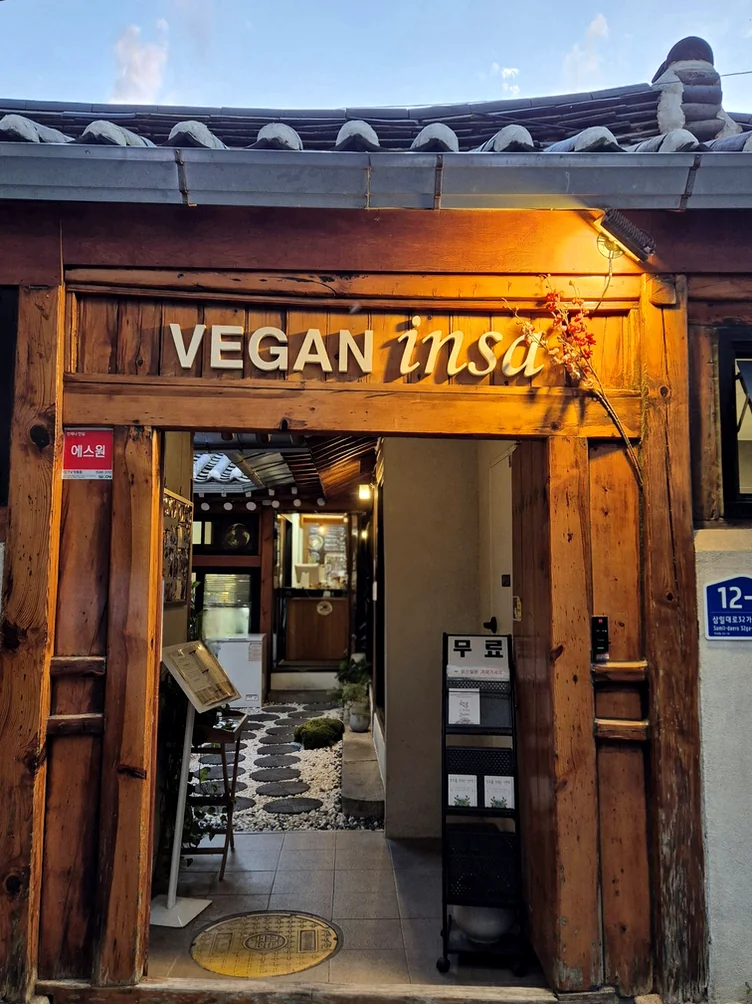
The first impression of Vegan Insa is defined by its architectural soul. The establishment resides within a Hanok that has survived over a hundred years, maintaining its structural integrity through weathered timber and clay. Upon entering, the atmosphere immediately shifts from the bustling energy of the city to a state of profound serenity. The design follows a traditional courtyard layout, allowing natural light to cascade over the wooden beams and stone floors, creating a tactile connection to the Earth that mirrors the plant-based philosophy of the menu.
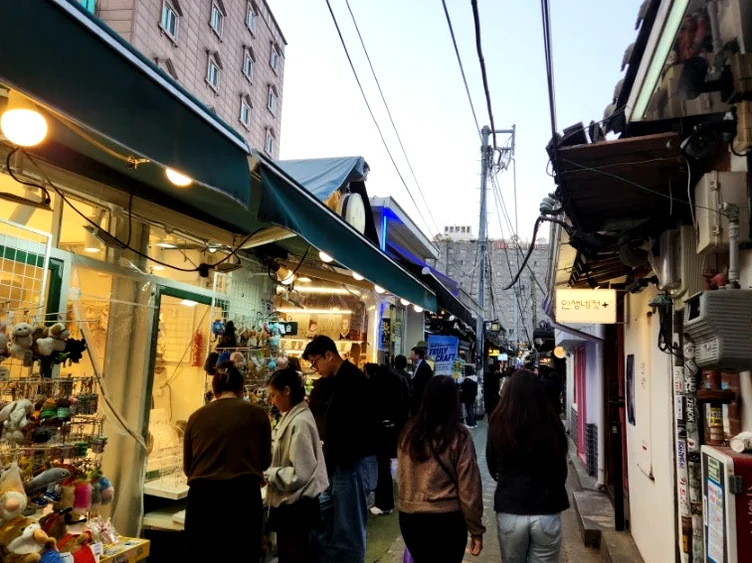
The narrow approach to the restaurant is part of the experience itself. Walking through the alleyway feels like a slow decompression, preparing the senses for the delicate flavors to follow. The textured walls and low eaves of the surrounding buildings provide a sense of intimacy that is rare in the high-rise landscape of modern Seoul. It is here that one realizes Vegan Insa is perfectly placed, embodying the resilience of tradition in a rapidly changing world.
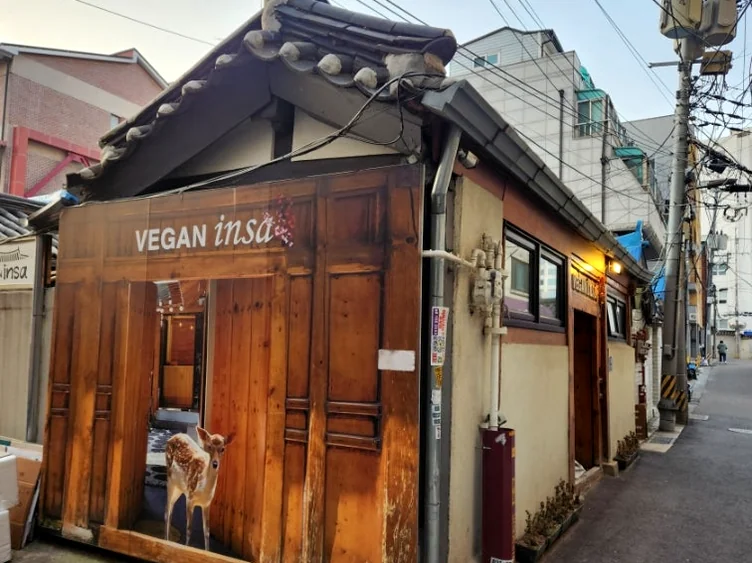
Artistry is found in every corner, even on the exterior. A striking mural featuring a deer—a symbol of longevity and peace in Korean culture—adorns the facade. This visual storytelling hints at the compassion found within the kitchen. Inside, the space is divided into a main hall and a more private annex, both overlooking a central garden that changes its character with the seasons. The scent of aged wood and the subtle aroma of simmering vegetable broth create an olfactory greeting that is both comforting and sophisticated.
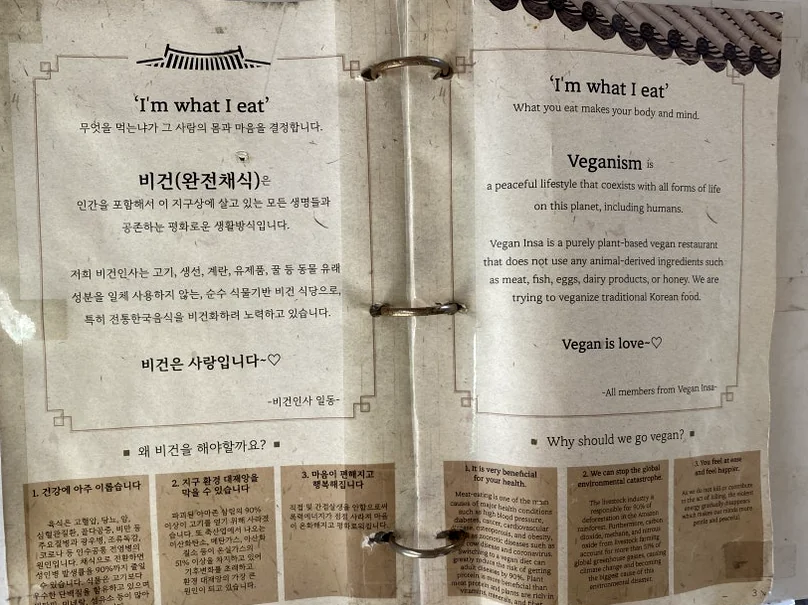
Navigating the menu at Vegan Insa is a seamless blend of tradition and modern efficiency. Digital kiosks allow for easy browsing of the diverse plant-based options, yet the physical menu remains as a tactile artifact of their culinary philosophy. From classic temple-inspired dishes to modern interpretations of Korean street food, the curated collection is comprehensive and inclusive, representing a tangible legacy of the owner's journey from journalism to peace-driven gastronomy.
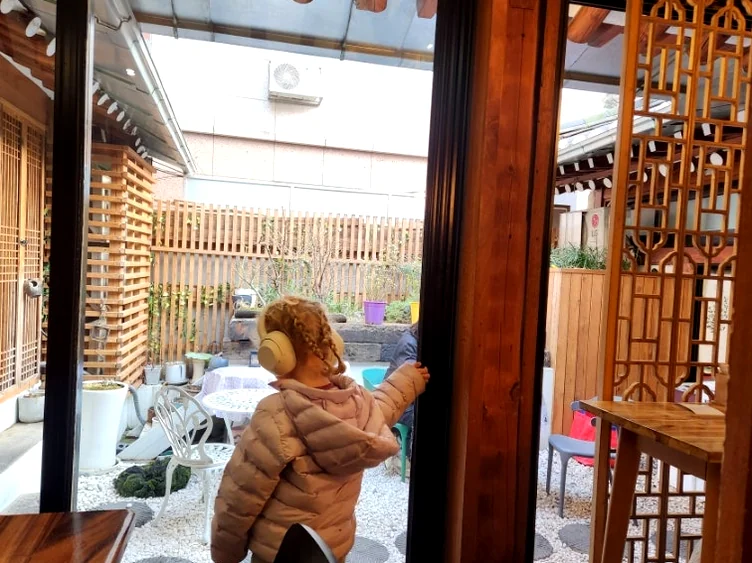
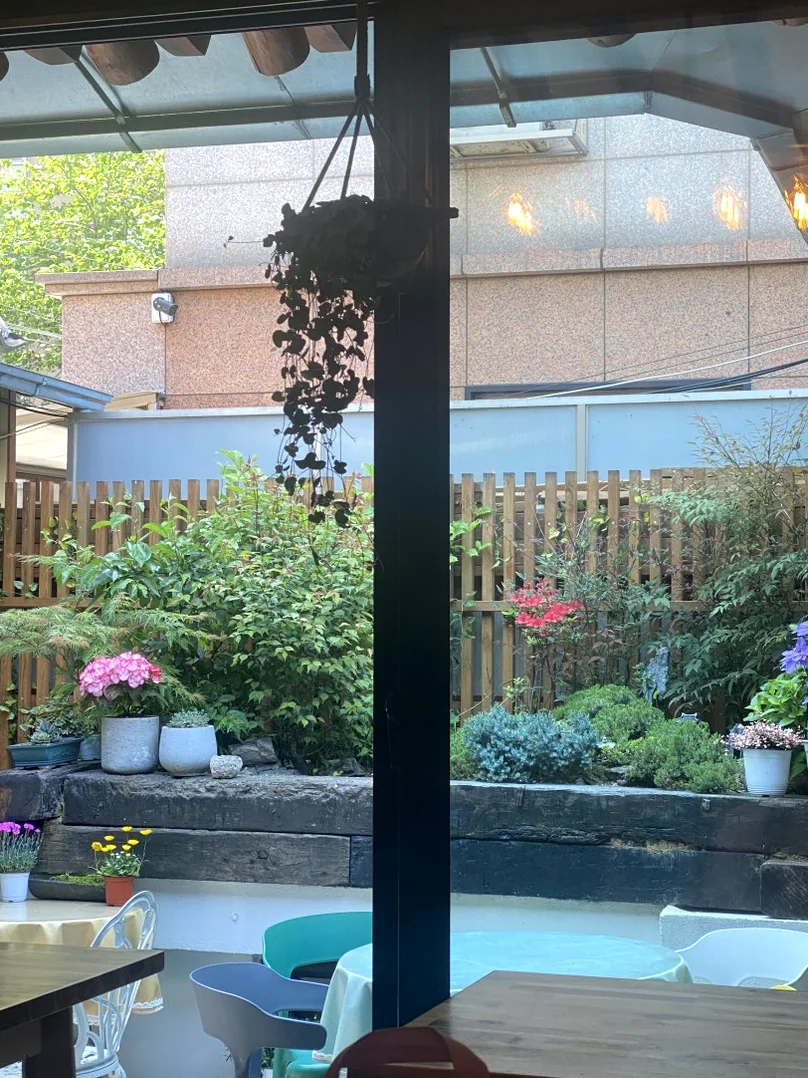
One of the most profound joys of dining here is the view from the interior. Sitting by the large glass windows, one can observe the play of light across the courtyard. The sunlit garden, filled with potted greenery and vibrant flora, provides a living backdrop to your experience. This visual connection to nature reinforces the restaurant's commitment to life in all its forms. Whether it is a rainy afternoon where the water rhythmically drops from the eaves or a bright spring morning, the ambiance remains consistently grounding.
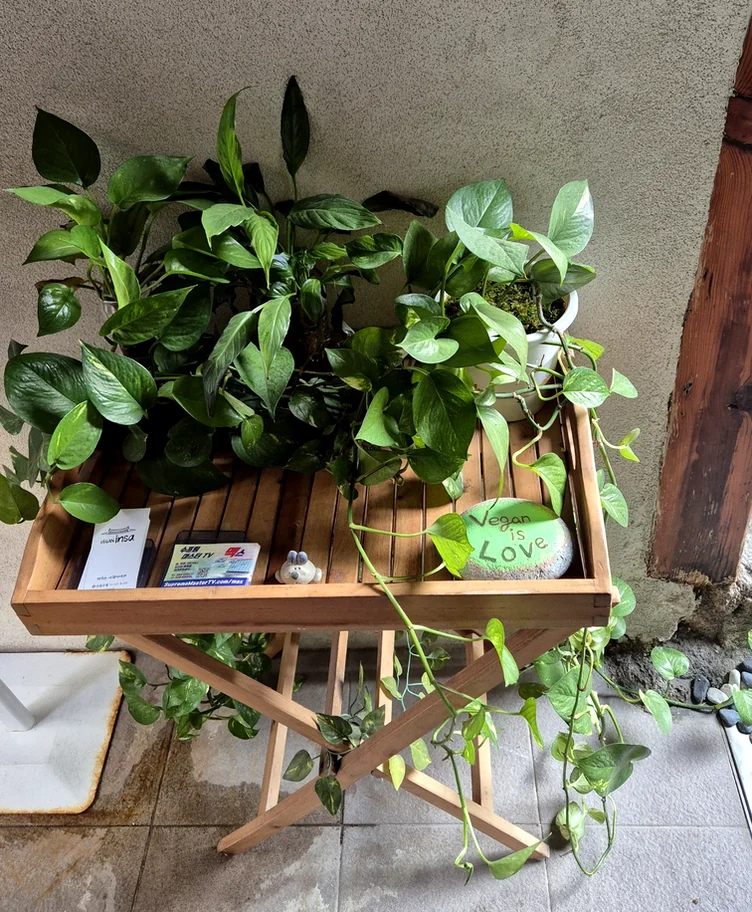
The greenery continues inside, with carefully curated plants and stones that add a soft, organic texture to the wooden interiors. These small details, such as a stone inscribed with the word Love, reflect the gentle spirit of the space. This personal touch elevates the experience from a simple transaction to a heartfelt exchange of values. It is a compelling reminder that the most exceptional dining experiences are often those that nourish the spirit alongside the body.
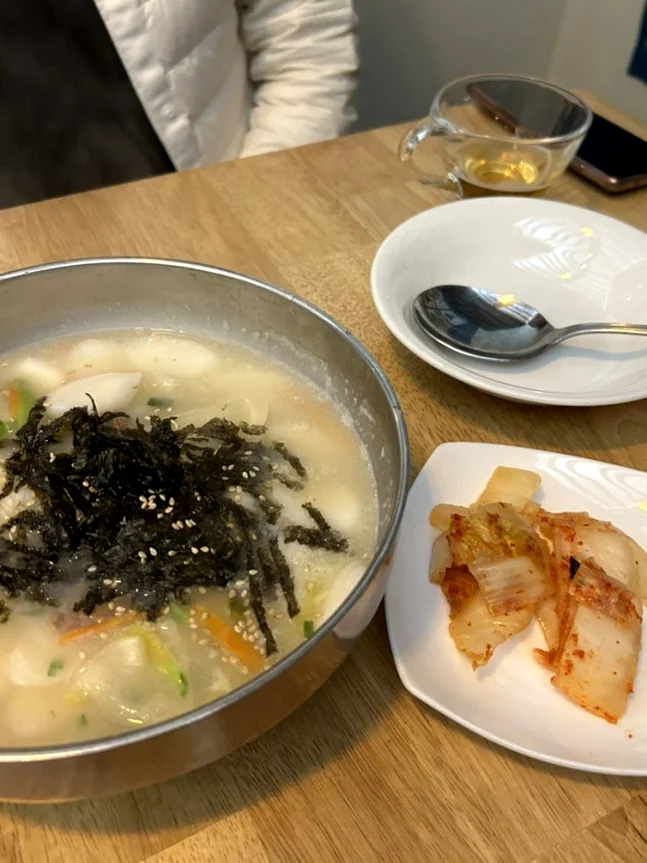
The culinary highlight for many is the Vegan Tteokguk, or Rice Cake Soup. Traditionally made with beef broth, this version uses a deep, savory vegetable stock that achieves a remarkable clarity of flavor. The rice cakes are perfectly chewy, accompanied by artisanal vegan kimchi that provides a crisp, fermented contrast. Another standout is the Soy-based Chicken, which captures the nostalgic texture of fried poultry using ingenious plant proteins. The crunch of the coating and the succulence of the interior prove that flavor and ethics are not mutually exclusive but rather complementary forces.
Director K's Perspective on the Experience
To truly appreciate the nuances of the space, I recommend arriving during the late afternoon just before the evening rush. This allows you to witness the transition of light within the Hanok, a moment of rare poetic beauty in the city. Acquiring a variety of small plates, such as the Mushroom Tangsuyuk and the Soy-bulgogi wraps, offers a broad spectrum of the kitchen's capabilities. Pair your meal with a non-alcoholic beer to refresh the palate between the savory, umami-rich bites.
Navigating the Ikseon-dong Maze
The most straightforward route to this sanctuary is via Jongno 3-ga Station, Exit 4. Cross the street and enter the main Hanok village entrance. Follow the path until you reach the end, take a left, and then a quick right. The restaurant is nestled at the end of a quiet side-alley, marked by its distinctive wooden signage and the deer mural. It is a rewarding journey for those who prefer the road less traveled, leading to a destination that defines the contemporary K-lifestyle.
Final Thoughts & FAQ
Vegan Insa is more than a dining destination; it is a vital part of the modern Seoul narrative. It proves that traditional Korean flavors are not bound by animal products, but by a deep respect for ingredients and the environment. For the expat seeking a taste of home-cooked comfort or the traveler looking for an ethical encounter with history, this 100-year-old Hanok offers a meal that nourishes both the body and the soul. It is an essential stop for anyone wishing to witness the sophisticated future of Korean heritage.
| Inquiry | Editorial Response |
|---|---|
| Menu Integrity | The entire curated collection is 100% plant-based and cruelty-free. |
| Accessibility | Public transport is essential; the narrow alleys of Ikseon-dong do not accommodate private vehicles. |
| Companion Policy | The space welcomes refined pets, serving as a sanctuary for local animal enthusiasts. |
| Securing a Table | Walk-ins are standard, though peak weekend hours necessitate a prior reservation for a seamless experience. |
📅 Local Weather Guide
Seoul Weather🌐 Read this post in other languages:
• 🇯🇵 日本語版 (Japanese Version)
Join the conversation